
Rio de Janeiro →
Compare Rio de Janeiro for seasonal weather, housing and everyday journeys. Open its guide for the local introduction, monthly climate and sources.

Explore the country
Brazil provides national context for a visit or move. Read its sourced introduction and dated national indicators, then compare individual cities for seasonal weather, housing and daily journeys. National averages cannot establish the costs, services or conditions of a particular neighbourhood.
Compare relocation preferencesBrazil, officially the Federative Republic of Brazil, is the largest country in South America. It is also the world's fifth-largest country by area and the seventh-largest by population, with over 214 million people. Brazil is a federation composed of 26 states and a Federal District, which hosts the capital, Brasília. Its most populous city is São Paulo, followed by Rio de Janeiro. Brazil has the largest Lusophone population in the world and is the only Portuguese-speaking country in the Americas, where it is the official language. Bounded by the Atlantic Ocean on the east, Brazil has a coastline of 7,491 kilometers , among the longest in the world. Covering roughly half of South America's land area, it borders all other countries and territories on the continent except Ecuador and Chile. Brazil encompasses a wide range of tropical and subtropical landscapes, as well as wetlands, savannas, plateaus, and low mountains. It contains most of the Amazon basin, including the world's largest river system and most extensive virgin tropical forest.
Compare Rio de Janeiro for seasonal weather, housing and everyday journeys. Open its guide for the local introduction, monthly climate and sources.
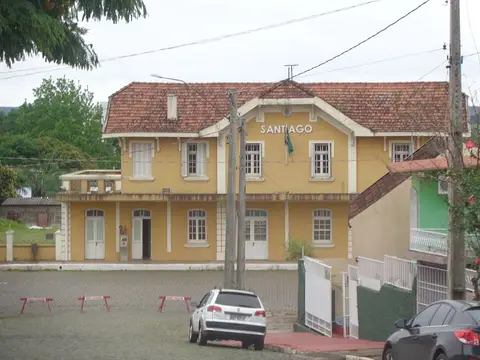
Compare Santiago for seasonal weather, housing and everyday journeys. Open its guide for the local introduction, monthly climate and sources.
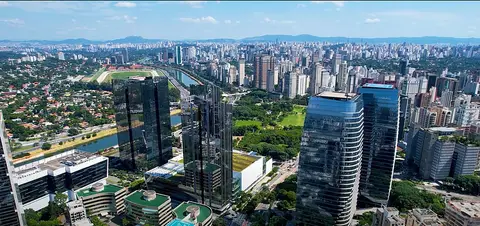
Compare Sao Paulo for seasonal weather, housing and everyday journeys. Open its guide for the local introduction, monthly climate and sources.
National averages are a starting point, not a neighbourhood budget. Shortlist specific places in Brazil, compare housing for your dates and check the journey to work, school or the activities that matter to you.
For a move, confirm residence and work requirements with the relevant government authority for your nationality. For a holiday, compare transport, accommodation and daily spending separately.
These figures describe Brazil as a whole. Check the dates when comparing these national indicators with current local conditions.
15.4 percent_gdp
Taxes and social contributions as a share of the economy, not your personal income-tax rate.
Data period: 2024. Source: World Bank — Tax revenue % of GDP (GC.TAX.TOTL.GD.ZS) · CC BY 4.0 with World Bank additional termsCompare with another city →84.5 percent
Data period: 2024. Source: World Bank / ITU — Individuals using the Internet, % (IT.NET.USER.ZS) · CC BY 4.0 with World Bank additional termsCompare with another city →40 ordinal_0_100
Data period: 2026-08-30. Limited confidence. Source: Wikidata — coordinates, population, timezone, ISO codes, official languages · CC0 1.0Compare with another city →607.3 USD/month
Average employee pay before tax and deductions, in US dollars. This country reference is not a city-specific salary or personal take-home pay.
Data period: 2025. Source: ILO — Average gross monthly earnings of employees · CC BY 4.0 (ILO datasets published from 3 May 2023)Compare with another city →76 years
Life expectancy describes population health outcomes; it does not measure the quality or availability of a particular hospital.
Data period: 2024. Source: World Bank — Life expectancy at birth (SP.DYN.LE00.IN) · CC BY 4.0 with World Bank additional termsCompare with another city →61.3 (EU average = 100)
Data period: 2025. Limited confidence. Source: World Bank — Price level index, household consumption (PA.NUS.PRVT.PLI) · CC BY 4.0 with World Bank additional termsCompare with another city →13.4 µg/m³
Data period: 2023. Limited confidence. Source: World Bank — PM2.5 mean annual exposure (EN.ATM.PM25.MC.M3) · CC BY 4.0 with World Bank additional termsCompare with another city →22,670 international dollars (PPP)
Purchasing-power-adjusted national income per person is not a salary or take-home pay.
Data period: 2025. Source: World Bank — GNI per capita, PPP (NY.GNP.PCAP.PP.CD) · CC BY 4.0 with World Bank additional termsCompare with another city →19.3 per 100,000 people
Homicide rates are a narrow safety indicator. They do not describe petty crime or the safety of an individual neighbourhood.
Data period: 2023. Source: World Bank / UNODC — Intentional homicides per 100k (VC.IHR.PSRC.P5) · CC BY 4.0 with World Bank additional termsCompare with another city →114.5 points (0–188)
Data period: 2025. Estimate. Source: World Bank HCI+ education pillar (2025) · CC BY 4.0 with World Bank additional termsCompare with another city →