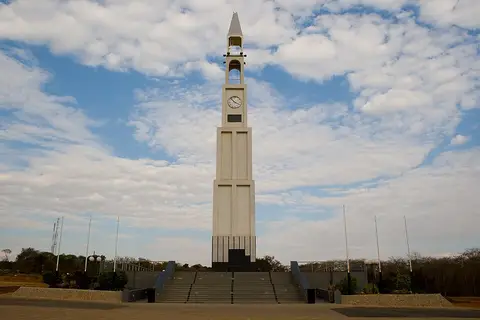
Lilongwe →
Compare Lilongwe for seasonal weather, housing and everyday journeys.

Explore the country
Malawi provides national context for a visit or move. Read its sourced introduction and dated national indicators, then compare individual cities for seasonal weather, housing and daily journeys. National averages cannot establish the costs, services or conditions of a particular neighbourhood.
Compare relocation preferencesMalawi, officially the Republic of Malawi, is a landlocked country in Southeast Africa. It is bordered by Zambia to the west, Tanzania to the north and northeast, and Mozambique to the east, south, and southwest. Malawi spans over 118,484 km2 and has a population of 22,224,282 . Lilongwe is its capital and largest city. The part of Africa now known as Malawi was settled around the 10th century by the Akafula, also known as the Abathwa. Later, the Bantu groups came and drove out the Akafula and formed various kingdoms such as the Maravi and Nkhamanga kingdoms, that flourished from the 16th century. The British Empire began to consolidate control of the area following the 1890 British Ultimatum against the Portuguese, who had claimed the area between Angola and Mozambique in the 1885 Pink Map. In 1891, the area was designated by the British as the British Central African Protectorate, renamed Nyasaland in 1907. In 1964, Nyasaland became independent under Prime Minister Hastings Banda and was renamed Malawi.
Open a city guide for its local introduction, monthly climate and sources.
Compare Lilongwe for seasonal weather, housing and everyday journeys.
National averages are a starting point, not a neighbourhood budget. Shortlist specific places in Malawi, compare housing for your dates and check the journey to work, school or the activities that matter to you.
For a move, confirm residence and work requirements with the relevant government authority for your nationality. For a holiday, compare transport, accommodation and daily spending separately.
These figures describe Malawi as a whole. Check the dates when comparing these national indicators with current local conditions.
16.7 µg/m³[1]
Data period: 2023. Limited confidence. Compare with another city →1,880 international dollars (PPP)[2]
Purchasing-power-adjusted national income per person is not a salary or take-home pay.
Data period: 2025. Compare with another city →67.6 years[3]
Life expectancy describes population health outcomes; it does not measure the quality or availability of a particular hospital.
Data period: 2024. Compare with another city →1.8 per 100,000 people[4]
Homicide rates are a narrow safety indicator. They do not describe petty crime or the safety of an individual neighbourhood.
Data period: 2012. Older figure — excluded from recommendations. Limited confidence. Compare with another city →19 percent[5]
Data period: 2024. Compare with another city →100 ordinal_0_100[6]
Data period: 2026-08-30. Compare with another city →15.6 percent_gdp[7]
Taxes and social contributions as a share of the economy, not your personal income-tax rate.
Data period: 2024. Compare with another city →47.6 (EU average = 100)[8]
Data period: 2025. Limited confidence. Compare with another city →52.7 points (0–188)[9]
Data period: 2025. Estimate. Compare with another city →Sources and notes
Rankings: Which countries have the highest inflation? · Which countries have the highest share of arable land? · Which countries have the largest share of children? · Which countries generate the most renewable electricity by share? · Which countries have the fastest-growing populations?